
Hangar Insulation — South of Buffalo
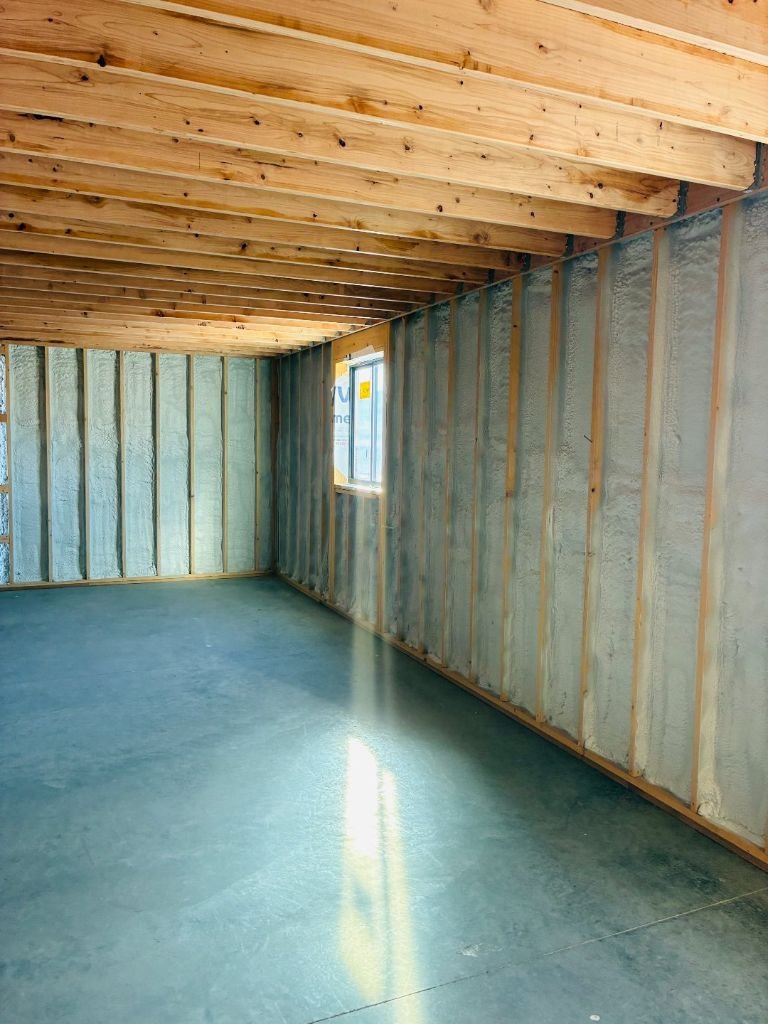
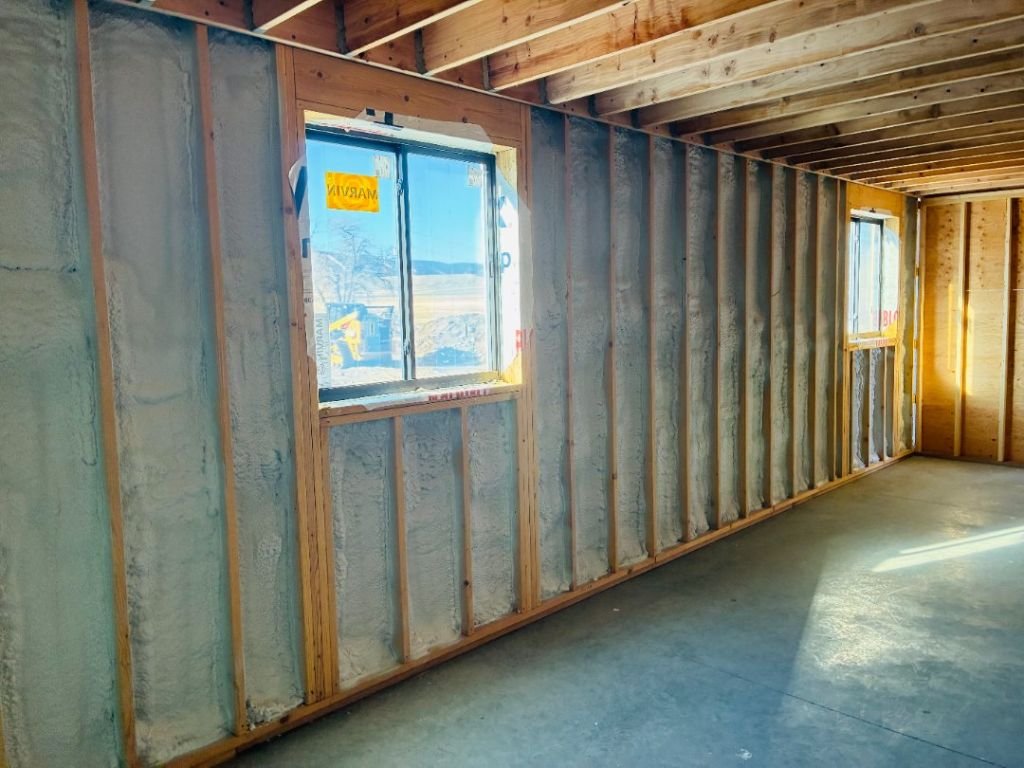
Full-envelope closed-cell spray foam on a large wood-framed hangar — main bay, interior tack rooms, and full wall + ceiling coverage built for high-plains wind and winter.
Last updated:
Out on the high plains south of Buffalo, buildings have to withstand wind, shifting temperatures, and long-term exposure. The right insulation choice can dramatically impact comfort, durability, and operating costs — and a hangar this size is exactly the kind of structure where those choices show up immediately in the energy bill.
Full-envelope coverage, not just the easy walls
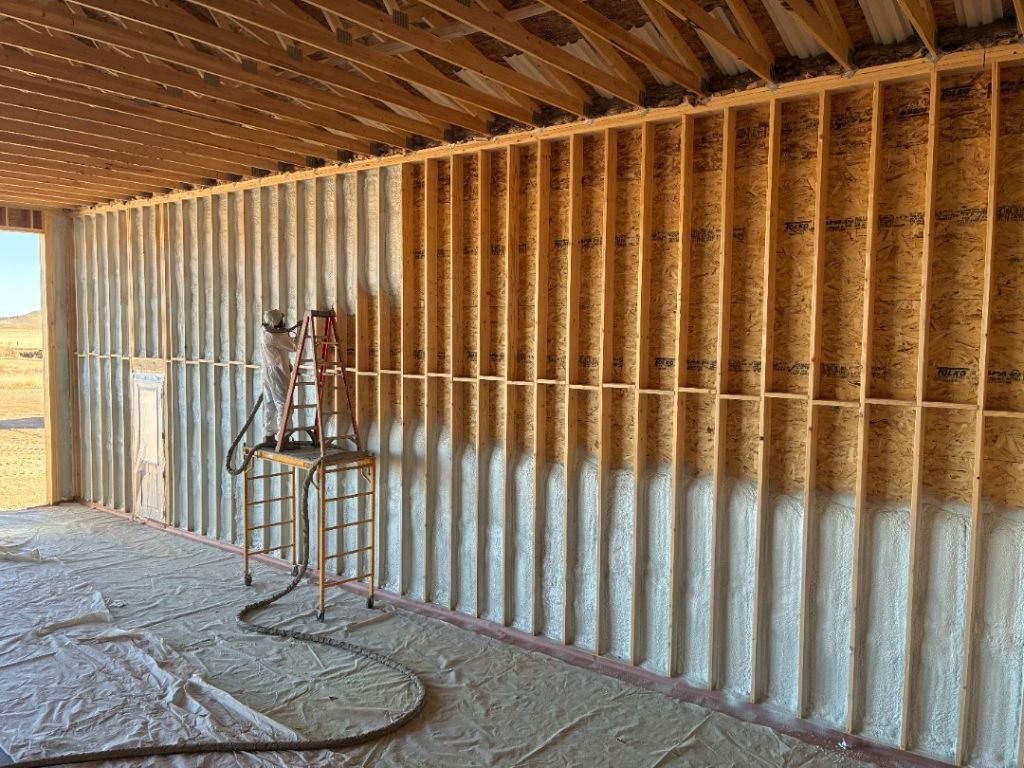
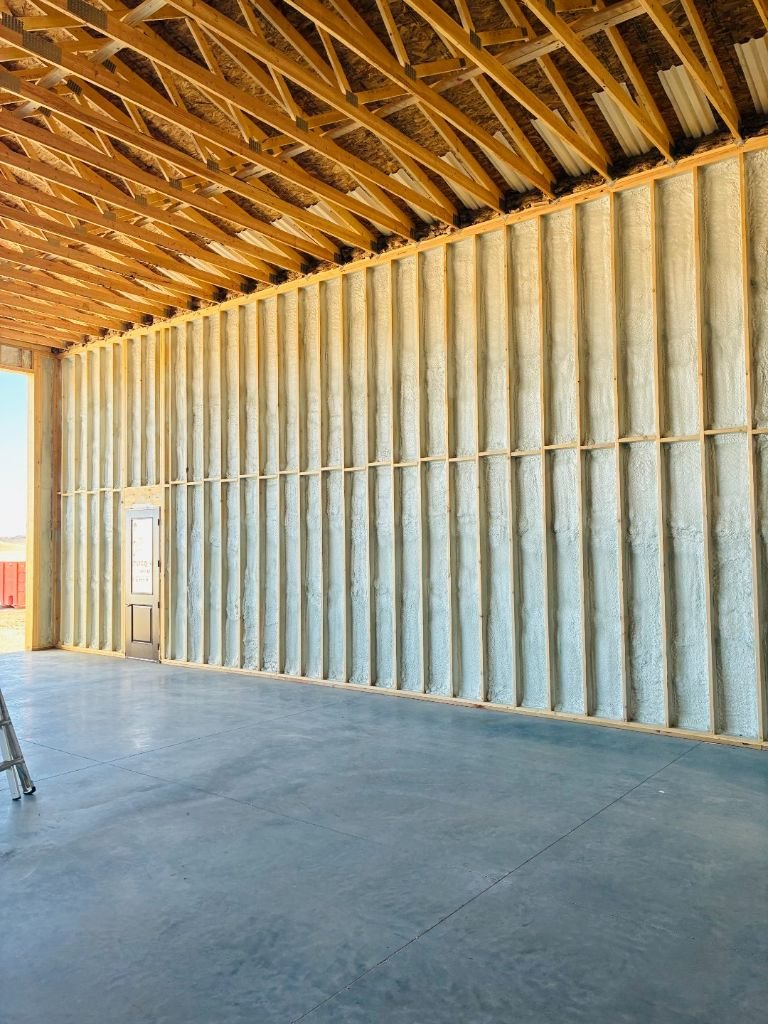
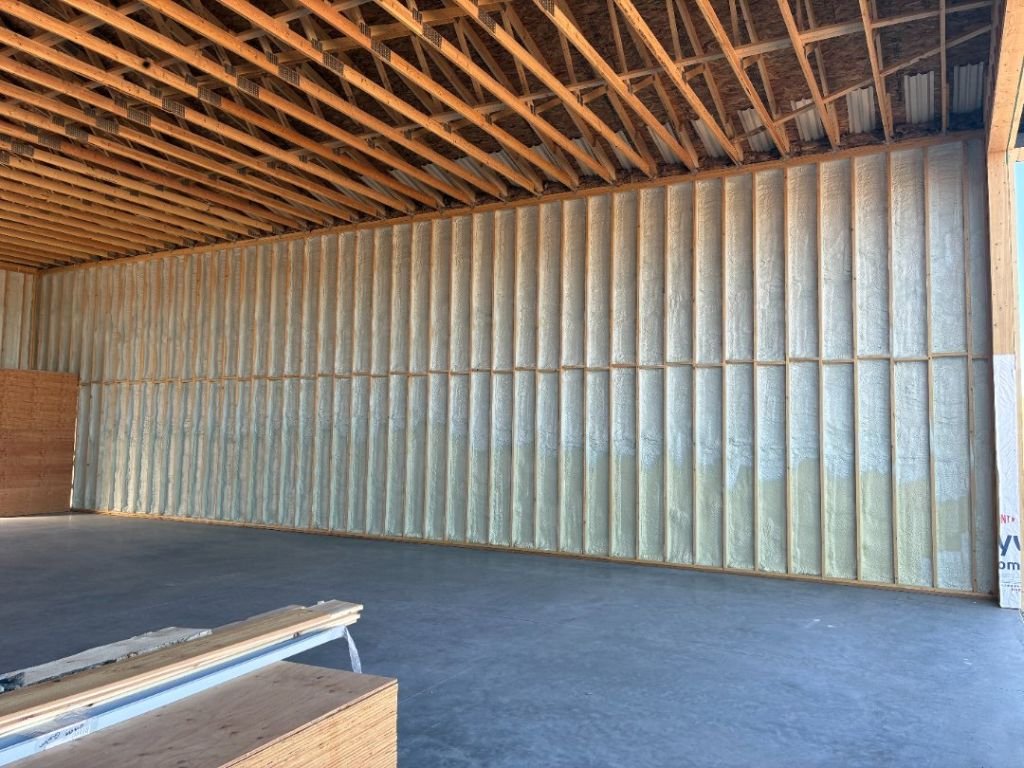
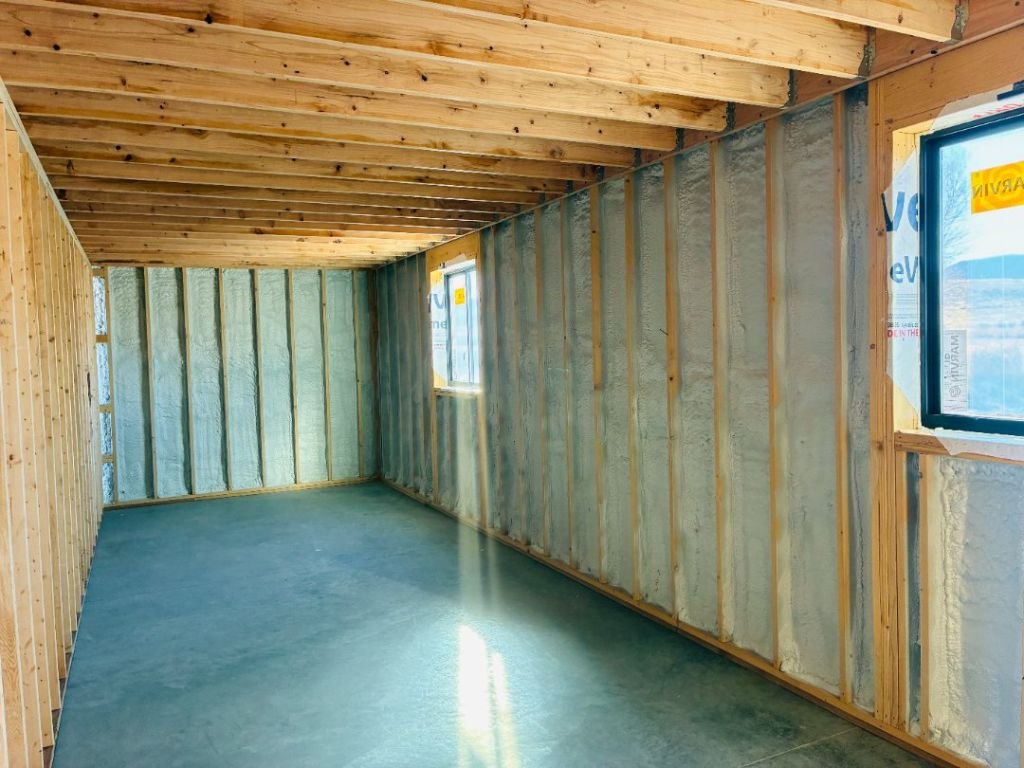
This was a whole-building project. The main hangar bay got closed-cell foam from floor plate to truss tail, top-to-bottom across every stud cavity — and the same crew came back through to spray the smaller interior tack rooms wall-by-wall. The goal was a single continuous thermal and air-sealing envelope, with no transitions where one assembly hands off to another batt material.
Working tall — and working efficiently
Most of the hangar walls run high enough that a stepladder isn't an option. Our crew worked off a rolling scaffold to keep the spray gun at a consistent distance from the studs through the upper third of the wall, where the wood is thinner and more likely to oil-can in the wind. Keeping pass speed and gun distance constant up there is what makes the difference between a finished cavity and a cavity with thin spots you'll find on the first cold morning.
Why closed-cell on a hangar
Whether it's a commercial hangar, a workshop, a shop building, or a residential home, closed-cell spray foam provides more than just thermal protection. It adds strength, reduces air movement, and creates a tighter, more efficient structure. On a tall framed hangar that experiences flex from wind loading on the long walls, the rigidity that closed-cell adds to the wall assembly is just as valuable as the R-value.
Built for the long run
If you're building new or upgrading an existing space, investing in the right insulation system today can protect your property for years to come. Spray foam doesn't settle, sag, or lose performance over time the way batt insulation can — and on a hangar that's a 30-year structure, that matters.
Photos from the project.


Other spray foam work.
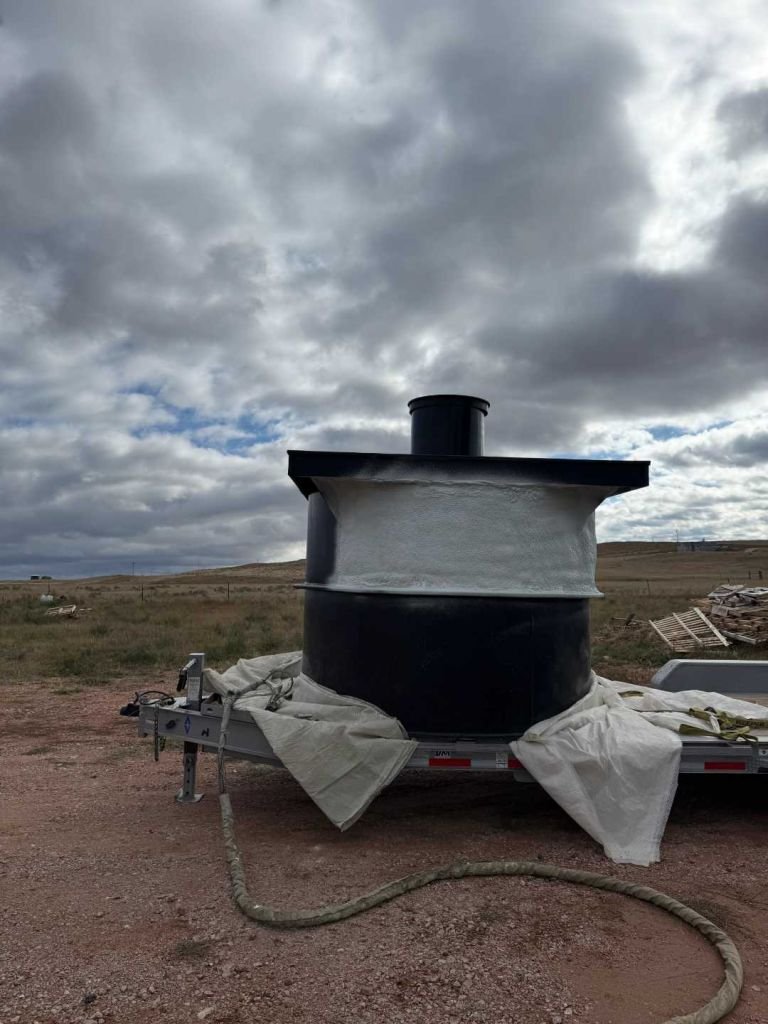
Cistern & Pump House — Pine Haven
Custom cistern with 2" closed-cell on the tank and 3" on the pump house, plus a frost barrier sprayed 4 feet out around the building.
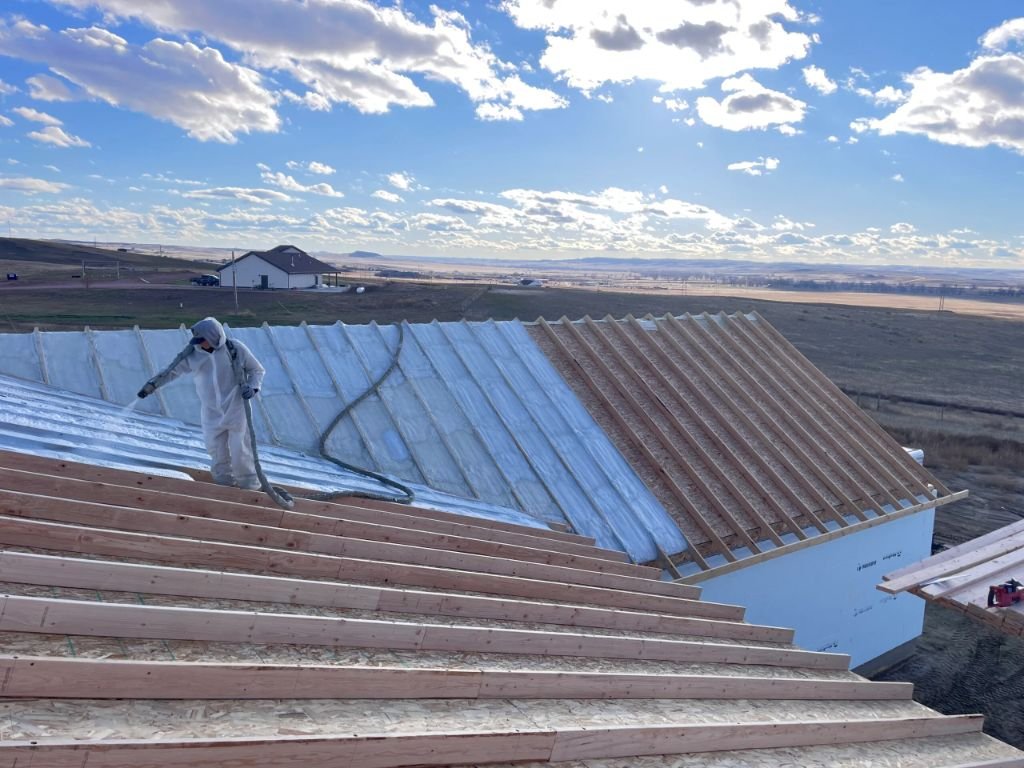
A Smarter Roof Built in Moorcroft
~4.5" closed-cell sprayed between vertical roof boards with a 1" vent gap — high R-value without the "hot roof" moisture risk.
Commercial Shop Insulation — Falcon Construction / MC Welding
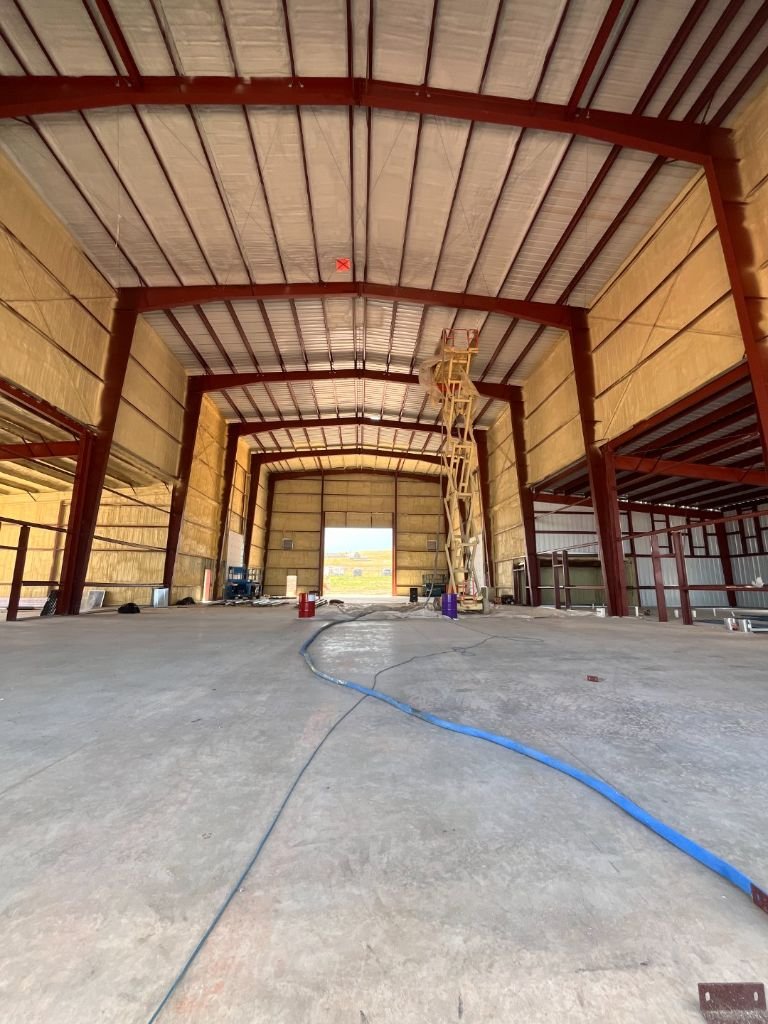
Full-envelope closed-cell spray foam on a large red-iron commercial shop for Falcon Construction’s MC Welding build — walls and roof deck between the purlins, with tall overhead doors integrated into the thermal envelope.
Door stuck? Gutter leaking?
Attic needs foam?
Send a quick note or call. Free on-site inspections for homeowners across Wyoming and the Black Hills — usually same week.