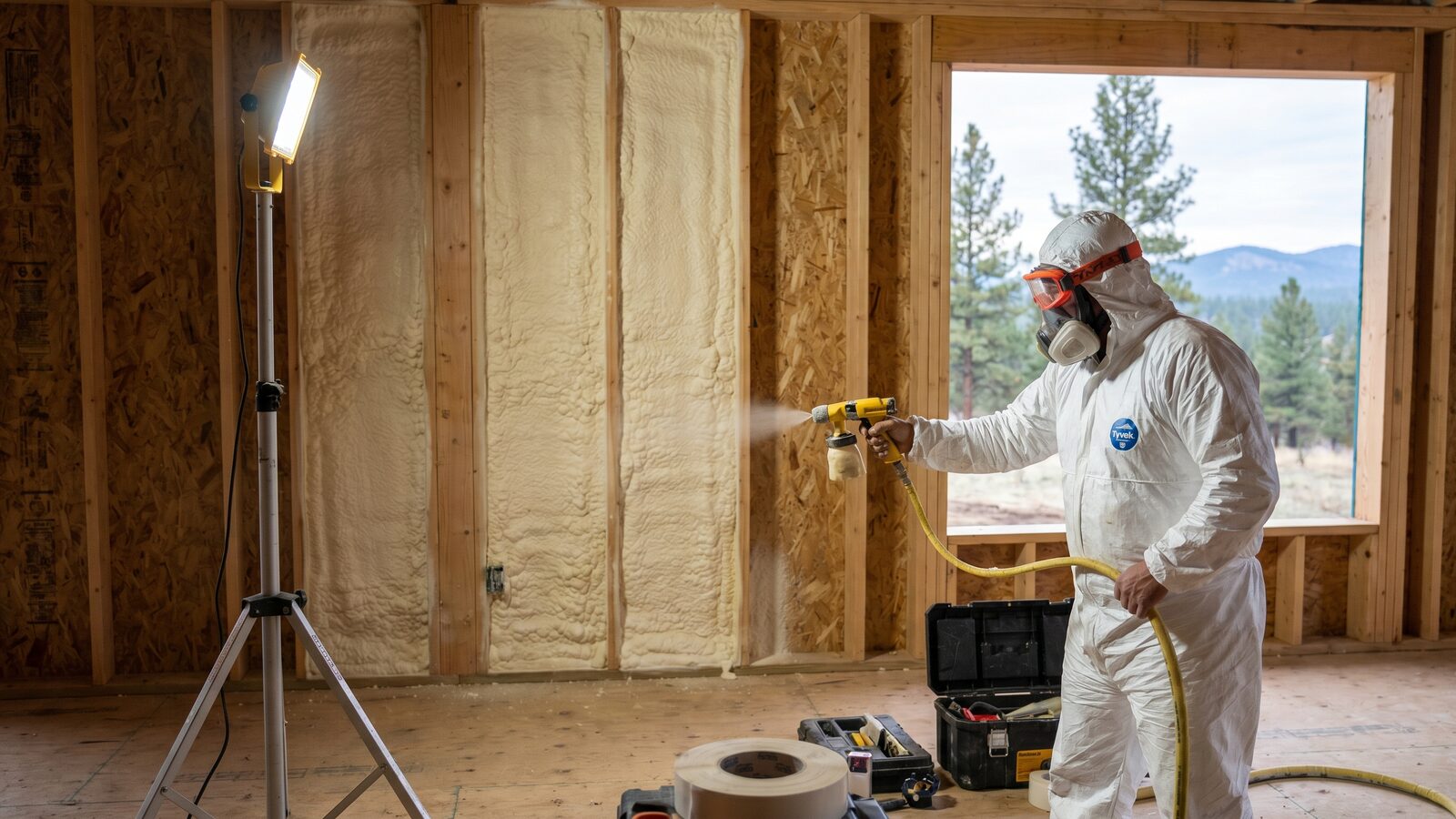
Closed-Cell vs Open-Cell Spray Foam — Which Is Right for Wyoming?
For Wyoming and Black Hills buildings: use closed-cell foam (R-7/inch, vapor barrier, adds structural rigidity) on exterior walls, unvented roof decks, metal buildings, and exposed crawl spaces. Use open-cell foam (R-3.5/inch, sound dampening) on interior walls and where you need a flexible, lower-cost fill.
This is the single most common question we get on a spray foam inspection. Both materials are urethane foam; the chemistry, density, and cost are different.
Closed-cell foam — the high-plains workhorse
Closed-cell foam is dense (~2 lb/ft³) and rigid. The cells are sealed, so it does three things open-cell can't:
- R-7 per inch — the highest R-value per inch you can spray.
- Class II vapor retarder at sufficient thickness — important in Wyoming's freeze-thaw cycles where moisture pushed from a warm interior toward a cold exterior wall can rot framing.
- Adds structural rigidity — closed-cell foam in a metal building or pole barn can increase wall stiffness significantly.
We use closed-cell in: exterior wall cavities, unvented roof decks, metal-building walls and ceilings, pole-barn shops, exposed crawl spaces, and rim joists.
Open-cell foam — softer, lighter, cheaper
Open-cell foam is light (~0.5 lb/ft³) and softer. The cells are open to each other, so it acts as a sound dampener but is vapor-permeable.
- R-3.5 per inch — fine for thicker cavities where you can fill a full 2×6 bay.
- Excellent sound dampening — interior walls, theater rooms, between floors.
- Lower cost per board foot than closed-cell.
We use open-cell in: interior walls (sound), vented attics where the assembly is designed to dry to the attic side, and budget-driven new builds with proper vapor strategy.
The Wyoming default
For a typical attached garage, shop, or new build in this region, closed-cell is the default for any cavity that touches the exterior. Open-cell is the default for interior partitions and sound-control work.
Cost
Closed-cell typically runs $1.00–$4.50 per board foot installed; open-cell $0.50–$1.50 per board foot. Use the spray foam calculator for a project estimate or schedule a free on-site inspection.
Questions we get most.
How do you quote a spray foam job?
We do not publish a public price list. Every spray foam quote is tailored after a free on-site inspection — we measure the area, confirm open-cell vs closed-cell, and pick the thickness that hits the R-value you actually need. Use the spray foam calculator on the site to send us your specs and we will email a quote the same day.
How do you quote a new garage door install in Wyoming?
Every install is quoted after a free on-site visit so the number matches the actual scope — size, insulation grade, opener, and whether we are hauling off an old door. Use the garage door calculator on the site to send us your specs and we will email back a tailored quote the same day.
Are you licensed and insured?
Yes. Seamless Systems LLC is a licensed and insured Wyoming home services company, founded in 2016 by Cody Williamson with over 25 years of combined crew experience in garage doors, gutters, and spray-foam insulation.
What is the difference between open-cell and closed-cell spray foam?
Open-cell foam is softer, lighter, has an R-value of about 3.5 per inch, and is great for sound dampening in interior walls and roof decks. Closed-cell foam is denser, has an R-value of about 7 per inch, adds a vapor barrier, and increases structural rigidity — common in our region for unconditioned shops, metal buildings, and exposed crawl spaces.